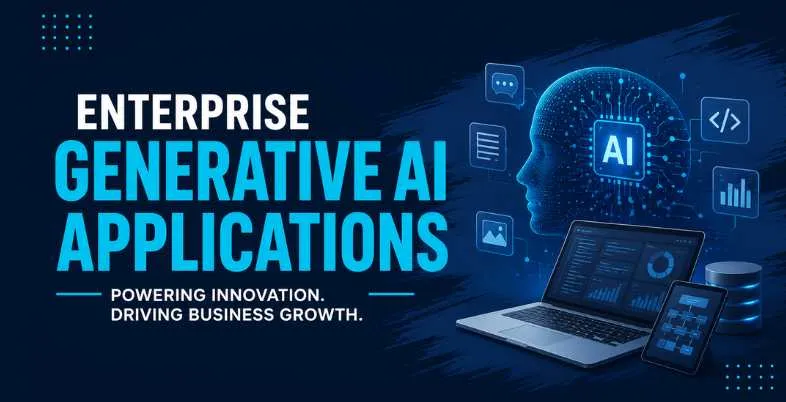
Generative AI is no longer just about chatbots and novelty demos for enterprise applications. They are the hubs of large organisations in 2026 when it comes to the selling, serving, manufacturing and managing risk. Today, generative AI is only evaluated by the return on investment, not its novelty, as retail giants automate support teams around the globe to biotech firms, speeding up the drug discovery process. In this article, we’ll dissect what enterprise generative AI is, the market’s evolution and 15 enterprise generative AI applications that are proven, high ROI, and relevant to retail, financial services, healthcare, and manufacturing.
You will also receive a working guideline for selecting vendors, mitigating risks, assessing ROI and implementing a production ready deployment. From assessing a new pilot to expanding a current one, this guide provides you with a transparent, up-to-date view of enterprise generative AI in 2026.
What Is Enterprise Generative AI in 2026?
Enterprise generative AI in 2026 is systems based on large language models that are integrated into business processes. These systems create text, code, images and structured data, and integrate with proprietary enterprise data, compliance rules, and existing software stacks.
Enterprise generative AI apps, unlike consumer chatbots, are designed for auditability, security, and business outcomes that are measurable, and they play a key role in the way that modern organizations operate, compete and scale.
From pilots to production: the 2026 shift
Most companies continued to conduct piecemeal generative AI pilots in 2023 and 2024, accessing limited data and with no firm ownership. That is the time of experimentation that is mostly over in 2026. Today, enterprise generative AI applications are deeply embedded within core systems such as CRM, ERP, and EHRs; regulated by dedicated AI risk teams; and linked to hard financial metrics.
Budget owners are looking for hard dollar savings or revenue gains before renewing contracts, forcing vendors to get a little more transparent about their costs and offerings instead of just trying things out blindly.
Generative AI vs agentic AI vs predictive AI — key distinctions
| Aspect | Generative AI | Agentic AI | Predictive AI |
| Core function | Creates new content (text, image, code) | Plans and executes multi-step tasks autonomously | Forecasts outcomes from historical data |
| Typical output | Documents, summaries, media | Completed workflows, actions taken | Scores, probabilities, forecasts |
| Human oversight | Reviews generated content | Sets goals, monitors execution | Interprets predictions |
| Example use | Drafting marketing copy | Resolving a support ticket end-to-end | Demand forecasting |
Enterprise Generative AI Market Size & Adoption Statistics (2026)
There’s been a clear trend toward incorporating generative AI into enterprise budgets—from pilot budgets to line items in IT and operations budgets. 79% of large companies deployed at least three business functions, with the top three being customer service, marketing content, and software engineering.
The software applications that use enterprise generative AI are more likely to be built with a hybrid of proprietary foundation models with fine-tuned open-source models, which lowers per-token costs. Analysts observing the space see growth being more from growth in successful deployments into other geographies and departments, than from the addition of new pilots.
Also Read: Top Ethanol Manufacturing Companies in India
15 High-ROI Enterprise Generative AI Applications in 2026
Retail & e-commerce
1. Klarna AI Assistant

Best for: Automating global customer support
Pricing:
- Custom enterprise licensing
- Volume-based transaction model
- No fixed pricing published
App Link/Website Link: https://www.klarna.com/international/?grs=%2F&grr=empty
AI Assistant is one of the most referenced enterprise generative AI-use cases for the customer-facing side of the business. It supports multilingual queries, handles refunds, and returns management, and embeds payments data directly in conversational flows. It was deployed in less than a month and it’s equivalent to the output of about 700 human agents, providing retail merchants across the globe with an instant channel to scale support services without a corresponding increase in headcount. The uniqueness of the platform is its ability to combine the context of financial transactions with natural language understanding, thus maintaining high post-purchase satisfaction while controlling costs in multiple markets.
Key Features:
- Multi-lingual chat
- Automated refunds
- Returns tracking
- Contextual product search
- Live price updates
- Financial habit tracking
2. Typeface AI
Best for: Enterprise brand content creation
Pricing:
- Team: $49/user/month
- Business: $99/user/month
- Enterprise: custom pricing
App Link/Website Link: https://www.typeface.ai/
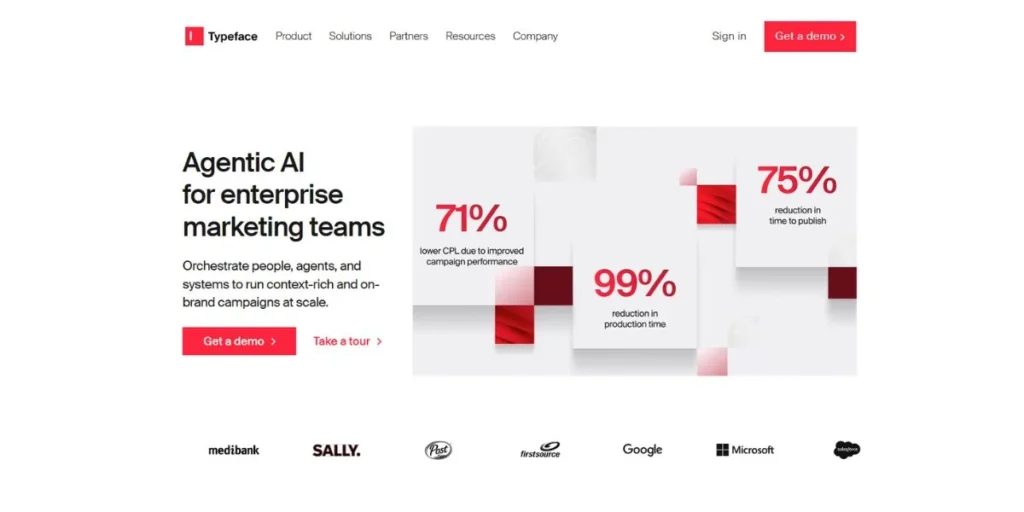
With Typeface AI, retailers can upload their catalog information and receive on-model imagery, along with customized product descriptions, in an instant with the added confidence of maintaining strict brand guidelines. This decreases the need for conventional photo shoots in a studio and improves the speed of marketing distribution through web, social and email simultaneously. Typeface is one of those more design-focused enterprise generative AI apps, focused on blending generative imagery at a high fidelity with structured, enterprise-grade marketing processes, providing creative freedom and centralized oversight on output uniformity for brand teams.
Key Features:
- Brand voice preservation
- On-model image synthesis
- Catalog data enrichment
- Multi-channel copy output
- Automated workflow spaces
- Content safety filters
3. Vue.ai (VueModel & VueTag)
Best for: Automated retail catalog management
Pricing:
- Custom enterprise subscription
- Usage-driven metric pricing
- Quote on request
App Link/Website Link: https://www.vue.ai/
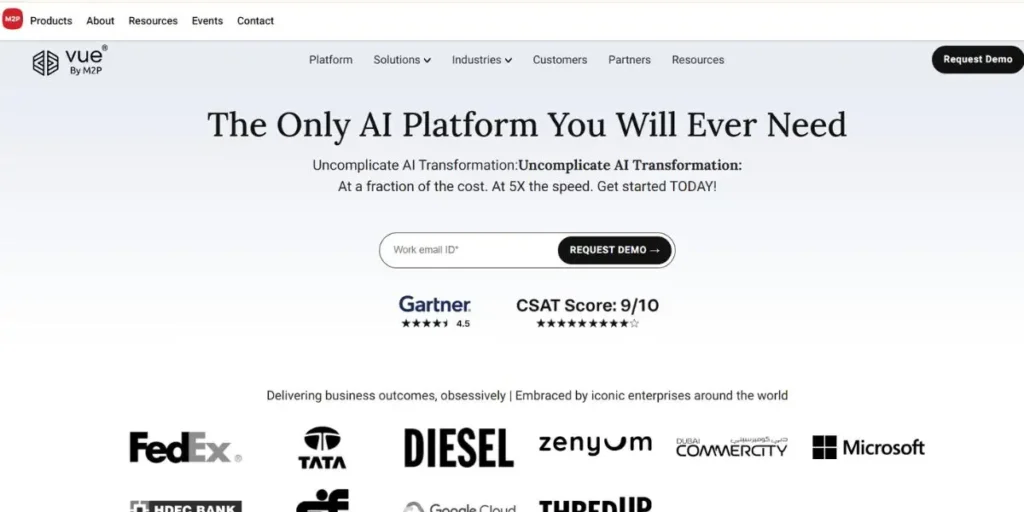
By leveraging computer vision and generative AI, Vue.ai transforms simple garment images into lifelike, on-model representations in fashion and retail catalog production, reducing operational costs. It also correlates shopper actions with item metadata to increase the average order value by providing personalised styling recommendations. Vue.ai is ideal for fast-moving fashion and apparel companies because its enterprise generative AI applications are well suited to retailers with lots of products in their catalog, as it can clear backlogs quickly and maintain visual content compliance.
Key Features:
- AI on-model imagery
- Virtual dressing rooms
- Automated product tagging
- Personalized styling tracks
- Inventory demand forecasting
- Content compliance moderation
4. Dynamic Yield (Shopping Muse)
Best for: Hyper-personalized e-commerce experiences
Pricing:
- Custom annual contracts
- Tiered by monthly pageviews
- Contact sales for details
App Link/Website Link: https://www.dynamicyield.com/ai/
Dynamic Yield’s Shopping Muse understands the casual and conversational nature of customer requests and transforms them into extremely personalized and semantic product suggestions, as opposed to strictly keyword-based searches. This system has proven to deliver real results for retailers in two key areas: cart conversion and homepage engagement. A leader in enterprise generative AI apps for personalization, Dynamic Yffect tailors itself to handling real-time behavioral data and continuously evolving catalogs, allowing merchandising teams to respond quicker to shifts in demand without having to manually build rules.
Key Features:
- Semantic intent recognition
- Conversational search interface
- Dynamic layout customization
- Predictive cross-sell logic
- Automated control groups
- Omnichannel behavior tracking
Financial services
5. AlphaSense
Best for: Corporate financial market intelligence
Pricing:
- Platform access: $10,000–$20,000/seat/year
- Median contract: around $18,000/year
- Enterprise tiers: can exceed $100,000/year
App Link/Website Link: https://www.alpha-sense.com/
AlphaSense cuts down on investment research by reducing the clutter of public filings, expert calls and analyst reports in millions of institutional documents. It focuses on a zero-hallucination search and sentence-level citations, which is why it’s a reliable enterprise generative AI tool for due diligence teams with limited time. It takes days of qualitative research and minutes on this platform, but, its particular strength in secure and transparent enterprise data handling has made it an industry standard at investment banks, hedge funds and corporate strategy teams.
Key Features:
- Generative search queries
- Document text summarization
- SEC filing indexing
- Expert call transcription
- Sentence-level audit citations
- Internal content integration
6. BloombergGPT
Best for: Niche financial NLP tasks
Pricing:
- Included with Terminal subscription
- Terminal seat: roughly $24,000+/year
- No standalone model pricing
App Link/Website Link: https://bloomberg.com/
BloombergGPT is a specifically designed 50-billion-parameter model that has been trained on the Bloomberg financial data corpus. It runs market sentiment scoring, financial news classification and compliance questions answering directly in the Terminal. It is one of the more niche enterprise generative AI applications in finance, providing trading desks with quicker access to structured analytics than general generative models. The model’s reliability for making time-sensitive trade decisions is driven by Bloomberg’s specialty in low-latency terminal software and global data distribution.
Key Features:
- Market sentiment analysis
- Financial entity recognition
- News story classification
- Advanced financial reporting
- Numeric token processing
- Automated trading analysis
7. Kensho (S&P Global Kensho)
Best for: Structuring market data intelligence
Pricing:
- Capital IQ Pro add-on
- API usage volume tiers
- Custom enterprise pricing required
App Link/Website Link: https://kensho.com/
Kensho integrates S&P Global’s trusted asset data with large language models, transforming unstructured documents and messy tables into machine-readable, clean formats with Kensho Extract. This eliminates the friction during a big company’s cross-border portfolio review and quickens the generation of the company’s tearsheet. This is especially valuable for M&A teams and analysts requiring structured, decision-ready information from unstructured, disparate sources in a moment’s notice. Among enterprise generative AI apps for institutional finance, Kensho’s strength lies in quantitative financial engineering.
Key Features:
- AI document extraction
- RAG pipeline optimization
- Company tearsheet compilation
- M&A transaction logging
- Table formatting logic
- Market shift prediction
8. Kasisto (KAI Banking)
Best for: Conversational retail banking intelligence
Pricing:
- Annual enterprise software licensing
- Tiered by customer volume
- Private pricing via sales
App Link/Website Link: https://kasisto.com/
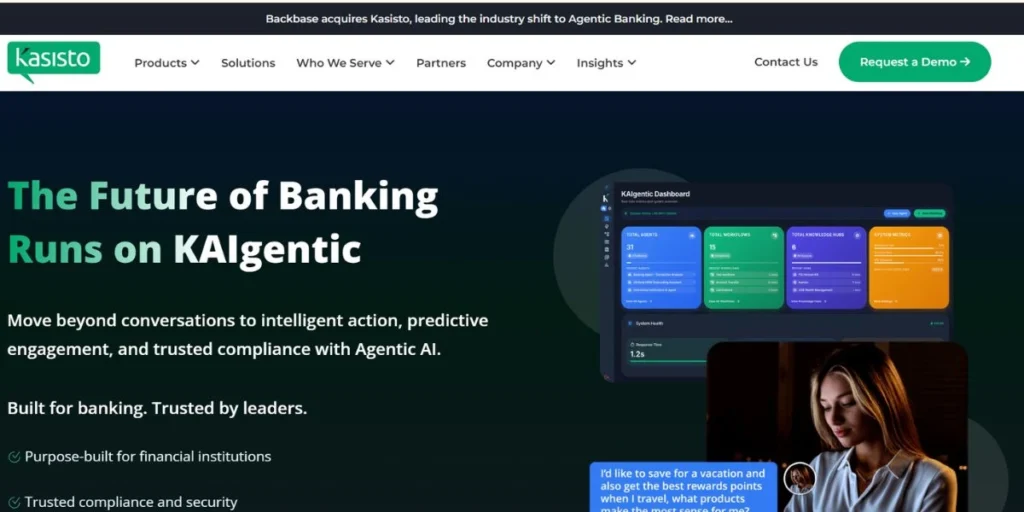
Kasisto’s KAI platform integrates agentic conversational AI into retail banks, and leverages KAI-GPT to securely scan compliance sheets and account information to provide timely and accurate responses. This reduces the cost of the contact centers while also boosting the trust for customers in digital banking channels. A banking-centric enterprise generative AI tool, Kasisto’s focus is on regulatory boundaries that help ensure that conversational banking remains compliant, and maximizing engagement with contextual follow-up questions that mirror the way a human relationship manager would respond.
Key Features:
- KAI-GPT document processing
- Multi-agent system coordination
- Secure account integration
- Transaction context memory
- Out-of-the-box intent banking
- Predictive user engagement
Healthcare
9. Insilico Medicine (Pharma.AI)
Best for: Generative AI drug discovery
Pricing:
- Multi-million milestone licensing agreements
- SaaS module subscription options
- Custom target-based pricing
App Link/Website Link: https://insilico.com/
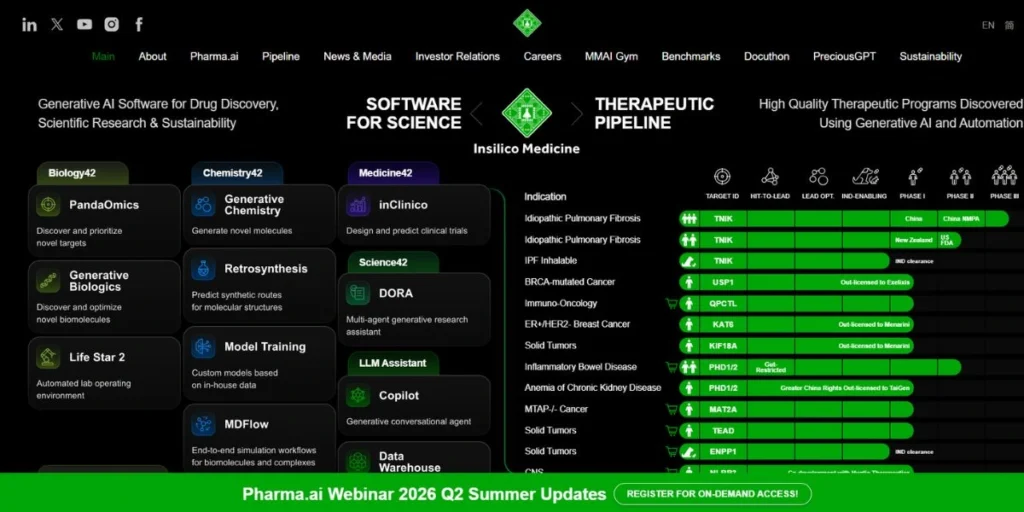
Insilico Medicine applies generative AI to identify new molecular pathways and create molecular compounds for hard-to-treat diseases. Its Pharma.AI suite dramatically reduces discovery timelines from years to months, adding value to biotech partners by reducing the risk of pre-clinical failure. Insilico is one of the most mature and sophisticated enterprise generative AI apps in life sciences, focusing on finding a match for complex target configurations using adversarial networks, thereby providing a quicker and more capital-efficient route for pharmaceutical partners from target identification to clinical candidate.
Key Features:
- Novel target identification
- De novo molecule generation
- Clinical trial simulation
- Lead compound optimization
- Pre-clinical safety mapping
- Multi-center cohort analysis
10. NVIDIA BioNeMo
Best for: AI-driven biomolecular design pipelines
Pricing:
- NVIDIA AI Enterprise: $1/GPU/hour
- Custom Azure/AWS marketplace pricing
- Free basic developer tier
App Link/Website Link: https://www.nvidia.com/en-in/
NVIDIA BioNeMo provides cloud microservices and foundation model frameworks designed specifically for structural biology research. It can speed up protein prediction and molecular sequence training, allowing pharmaceutical companies to conduct massive virtual screenings without significant physical laboratory expenses. BioNeMo’s focus on delivering accelerated infrastructure, particularly for high-performance applications, positions it as a compelling choice for organizations deeply entrenched in NVIDIA’s hardware ecosystem for their large-scale biological simulation projects.
Key Features:
- Protein structure modeling
- Molecular interaction screening
- Accelerated inference tools
- Agent toolkit integration
- NIM deployment microservices
- Biofoundation model recipes
11. Tempus One
Best for: Precision oncology decision support
Pricing:
- Enterprise diagnostic data contracts
- Billed per clinical test
- Institutional health system options
App Link/Website Link: https://www.tempus.com/
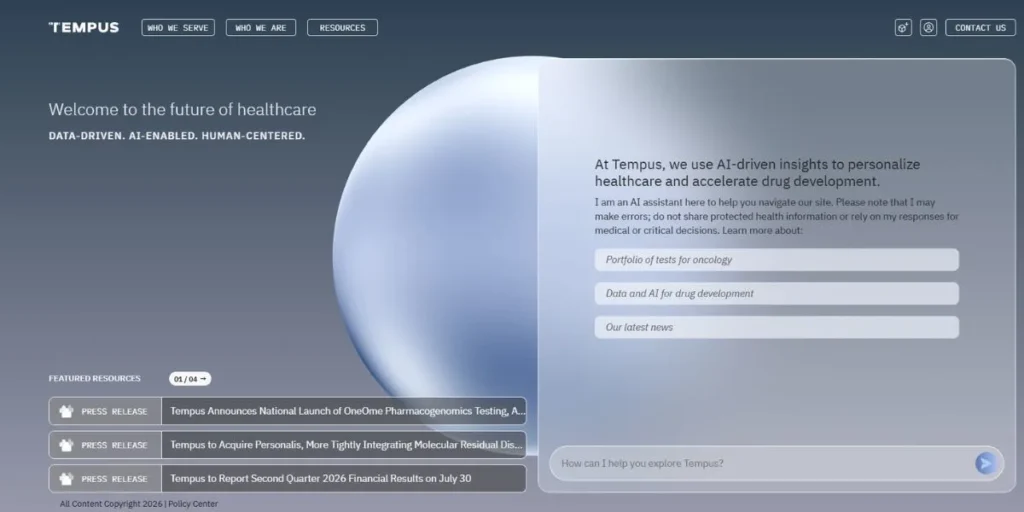
Tempus One is a voice and text generative assistant that provides multimodal diagnostic tracking directly to oncologists. It scours comprehensive molecular and genomic databases, emerging targeted therapy recommendations in rapid fashion, and matches tumor characteristics to specific clinical trials. A clinical-grade enterprise generative AI applications, Tempus focuses on real-world evidence at scale and supports care teams to make faster and more personalized treatment decisions, while minimizing the manual research workload for oncology specialists.
Key Features:
- Real-world evidence searches
- Genomic profiling analysis
- Clinical trial matching
- EHR ambient sync
- Therapeutic response tracking
- RNA mutation mapping
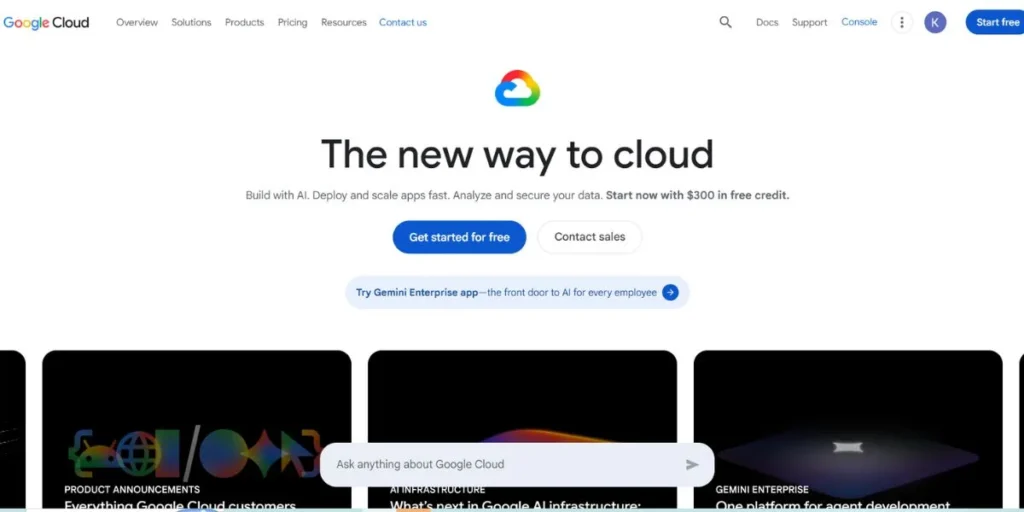
12. Google MedLM
Best for: Clinical-grade medical reasoning benchmarks
Pricing:
- Google Cloud API pay-per-token
- Custom healthcare partner agreements
- Requires institutional approval access
App Link/Website Link: https://cloud.google.com/
MedLM is Google’s family of core healthcare models, trained on the datasets of experts, and designed to support structured medical QA. It mitigates workflow strain while helping hospital administrators automate transcription and securely update patient case files, keeping compliance in mind. MedLM is one of the most rigorously tested enterprise generative AI tools in medicine, and benefits from Google’s web-scale modeling infrastructure, providing a reliable base for healthcare partners for administrative and clinical reasoning tasks.
Key Features:
- Expert medical Q&A
- Clinical workflow summarization
- Agent builder templates
- Rigorous safety filtering
- USMLE reasoning logic
- Multi-step task problem-solving
Manufacturing
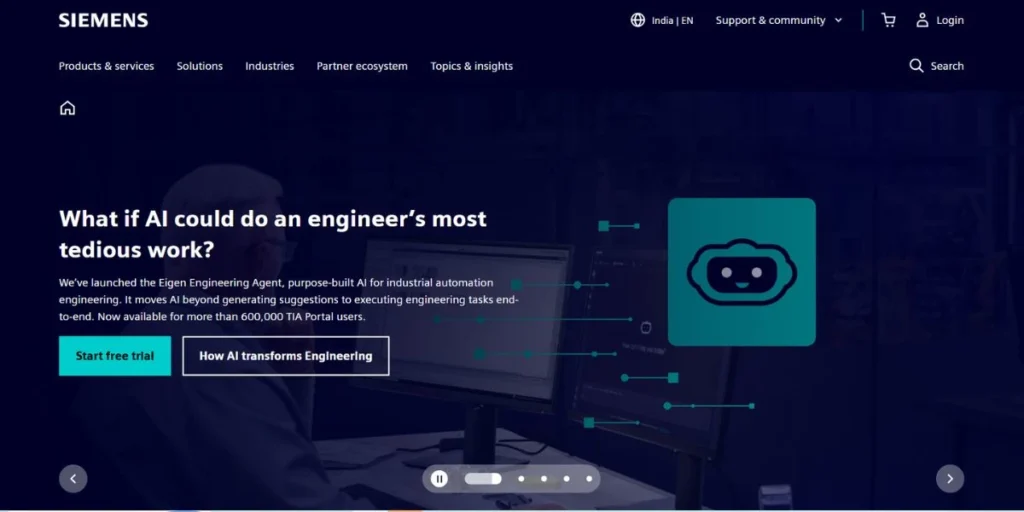
13. Siemens Industrial Copilot
Best for: AI-driven industrial automation engineering
Pricing:
- Siemens Xcelerator platform license
- Tiered by connected shop-floor machines
- Contact sales for setup
App Link/Website Link: https://www.siemens.com/en-gb/
Developed in cooperation with Microsoft, Siemens Industrial Copilot creates, optimizes and debugs automation code from natural language prompts. It substantially reduces the time required for equipment ramp up and makes the work of plant engineers more intuitive to technical and non-technical personnel. In the world of enterprise generative AI applications in heavy industry, Siemens excel at software-defined factory ecosystems, where manufacturers can reduce maintenance backlogs and boost efficiencies on the factory floor simultaneously at several facilities without the need for extensive specialist engineering staff at each location.
Key Features:
- SCL code generation
- Industrial automation debugging
- 24/7 maintenance troubleshooting
- PLC logic optimization
- Cross-functional data syncing
- Shop-floor chat interface
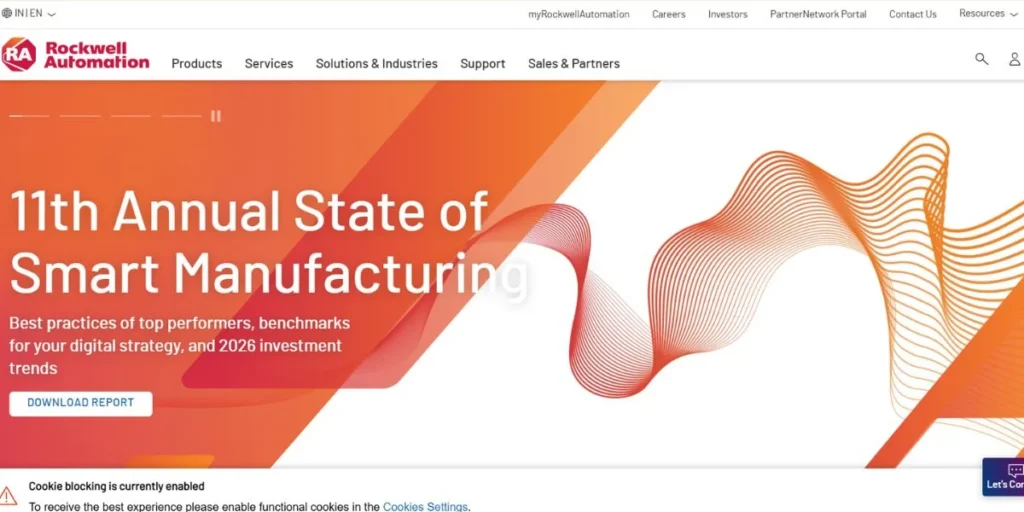
14. Rockwell Automation (FactoryTalk Design Studio)
Best for: Smart factory system modeling
Pricing:
- DataMosaix Standard: $15,000/12-months
- FactoryTalk View: from $35,000/year
- Enterprise tiers: scaled privately
App Link/Website Link: https://www.rockwellautomation.com/en-in.html
FactoryTalk Design Studio integrates generative AI seamlessly into engineer’s control design environments, enabling engineers to simply type in a text prompt to configure controllers and to track runtime errors. This reduces design iteration time from weeks to days and provides quick organizational return on investment. Rockwell is a heavy-industry application of generative AI, with a focus on capable hardware-software links to enable large manufacturers to modernize control systems without having to rip and replace existing investments in their production lines.
Key Features:
- Generative copilot programming
- Machine safety validation
- Control object reuse
- Automatic code explanation
- Remote device monitoring
- Error resolution assistant
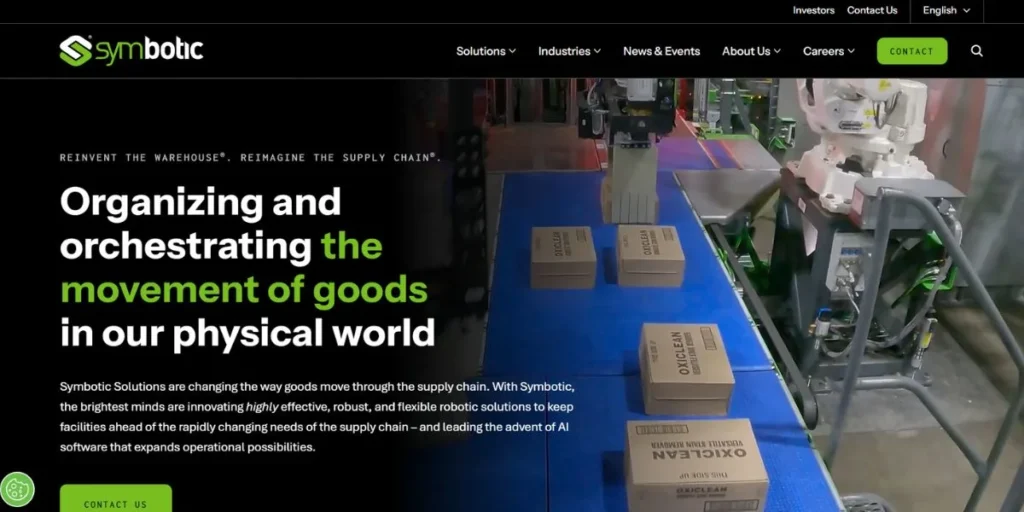
15. Symbotic (LocusONE Platform)
Best for: Autonomous supply chain orchestration
Pricing:
- Multi-year system contracts
- GreenBox Warehouse-as-a-Service model
- Custom capital deployment evaluations
App Link/Website Link: https://www.symbotic.com/
Symbotic uses AI perception and hardware orchestration to operate its fully independent fulfillment facilities. The software systems control the vision-guided transport robots and optimise the storage density and throughput of warehouses while simultaneously reducing standard labour costs significantly. Symbotic is one of the most capital-intensive enterprise generative AI applications featured here, catering to high-density material handling systems for large commercial retail chains, which makes it a good choice for enterprises with large, high-volume distribution networks.
Key Features:
- AI fleet orchestration
- Vision-guided robot navigation
- Real-time throughput analytics
- Smart pallet tracking
- High-density space optimization
- Dynamic inventory placement
How to Choose the Right Generative AI Tools & Vendors
Build vs buy vs fine-tune
| Approach | Best for | Time to deploy | Cost profile |
| Buy (SaaS platform) | Standard use cases, fast rollout | Weeks | Predictable subscription |
| Fine-tune | Domain-specific accuracy needs | Months | Moderate, ongoing tuning cost |
| Build in-house | Highly proprietary, differentiated workflows | 6–12+ months | High upfront, lower long-term per-use cost |
Comparison table of leading enterprise AI platforms
| Platform | Primary sector | Pricing model | Standout strength |
| Klarna AI Assistant | Retail | Volume-based | Multi-lingual support automation |
| AlphaSense | Financial services | Per-seat annual | Zero-hallucination research |
| Insilico Medicine | Healthcare | Milestone licensing | Molecule generation speed |
| Siemens Industrial Copilot | Manufacturing | Machine-tiered license | Automation code generation |
| Vue.ai | Retail | Usage-based | Catalog imagery automation |
Risks, Governance & Hallucination Mitigation
- Set up an AI governance owner responsible for all productions.
- Expect sentences to be cited or “grounded” in the source for any output used in decision-making.
- Periodically conduct red team testing to prevent hallucinations from reaching customers.
- Ensure humans remain in the loop for outputs such as medical, legal, or financial advice where stakes are high.
- Record all interactions with models for audit and regulatory review.
- Define data retention and access policies prior to connecting enterprise data.
Measuring ROI: A Practical Framework
Calculating ROI for enterprise generative AI applications begins with selecting two or three metrics that directly impact cost or revenue, like fewer support tickets, quicker document processing, or increased conversion rates. Compare these with the corresponding baseline measurement taken prior to the deployment and monitor monthly for at least a full three-month period.
To get a true payback period, include implementation and licensing costs, in addition to usage fees. The most compelling ROI arguments are based on a hard cost metric plus a softer one, such as customer satisfaction, that makes the investment look like it’s smartly spent to increase efficiency and improve experience.
Implementation Roadmap: From Pilot to Production
- Do not choose any tool without first recognizing one workflow that has many high-friction elements and is clearly causing measurable pain.
- Conduct a pilot program with a small group of participants and a predetermined assessment period of 60 – 90 days.
- Establish criteria for success before the pilot so that it will have a clear pass/fail criteria.
- Engage IT security and compliance as early as possible to prevent rework as you scale deployments.
- Once the pilot is showing measurable value, begin to grow to other teams.
- Develop a feedback loop for continual improvement of the model and workflow post-launch.
Conclusion
In retail, financial services, health care and manufacturing, enterprise generative AI applications have evolved into reliable, revenue-generating solutions. The fifteen tools in this list demonstrate the diversity of the field, ranging from customer support automation to drawing inspiration from nature in the development of molecular drugs.
The key to success in 2026 is not following the latest craze for the latest car, but rather having a strategic vendor selection approach, good governance, and a clear ROI model. The enterprises that are using generative AI as an integral part of business growth and not a side project are getting the best, lasting returns this year.
Also Read:
FAQs
What are the most promising enterprise generative AI applications for 2026?
Customer service automation, targeted marketing material, financial research summarization, pharmaceutical research, and industrial code generation have been the most successful use cases so far this year.
What are enterprises going to spend on generative AI in 2026?
Pilots have been replaced by permanent operational line budgets, and the majority of big enterprises are currently investing in deployments in three or more business functions.
What is agentic AI and what is the difference between agentic AI and generative AI?
Generative AI generates content, agentic AI orchestrates multi-step processes independently, sometimes incorporating generative AI as part of the process.
What are the biggest risks of enterprise generative AI adoption?
Typical risks faced by organizations include hallucinated output, weak governance, data privacy gaps, and the absence of human oversight in making high-stakes decisions.
When will people start to see return on investment from generative AI?
For most businesses, the ROI is measurable within one to two quarters of a scoped pilot, if the measure of success was clearly established prior to launch.