
With the advent of new 5G rollouts, evolving tariff structures, and updated Know Your Customer (KYC) regulations for 2026, selecting a sim card companies in India can be perplexing. It does matter in a time when you, as a long time user switching networks, a student getting your first connection or a traveller landing in India for the first time, know your options.
This guide explains all the major players in detail from private players such as Jio and Airtel, and the state-owned BSNL and MTNL, right through to niche infrastructure and enterprise players. At the end, you will be able to rest easy knowing that you’ve found the best network for your budget, your data requirements and your location, rather than being lost in the weeds of technical jargon or out-of-date pricing data.
SIM Card Companies in India: Quick Overview
In 2026, India’s telecom market will be a private-sector duopoly where the combined market share of Reliance Jio and Bharti Airtel will be the highest. Vodafone Idea is in third place, while BSNL and MTNL cater to budget and legacy markets and are under government control.
There are also tower sharing companies, enterprise data carriers and neutral-host indoor network providers who are responsible for keeping it all moving in the background beyond retail mobile operators. As a combined force, these players provide some of the world’s competitive and most dynamic mobile markets.
Top 10 SIM Card / Telecom Companies in India (2026)
1. Reliance Jio
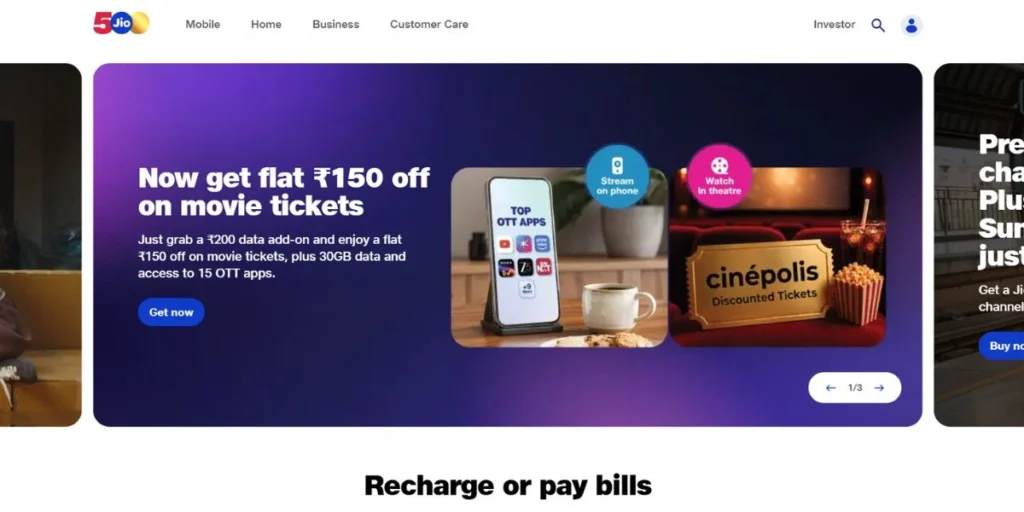
| Parameter | Details |
| Ownership | Private (Subsidiary of Reliance Industries) |
| Network | 4G & 5G Standalone (SA) |
| Approx. Market Share | 39.27% |
| Starting Prepaid Plan | ₹189 (28 Days, 2GB Data, Unlimited Calling) |
| Best For | High-speed 5G data availability and digital app ecosystems |
| Website | https://www.jio.com/ |
Reliance Jio is the largest sim card company in India and has developed the world’s fastest Standalone 5G network in urban and rural areas. Heavy capital spending and a single digital ecosystem of JioFiber broadband, cloud storage, JioCinema streaming and budget-friendly JioBharat 4G handsets drives its growth. Jio has an unmatched pricing power with its scale of over 503 million subscribers. Its niche is in providing dependable, data-intensive 5G service packages with entertainment and cloud service, which is the preferred option for users who rely on a lot of mobile data on an everyday basis and who prefer an all-in-one experience in the digital realm.
2. Bharti Airtel
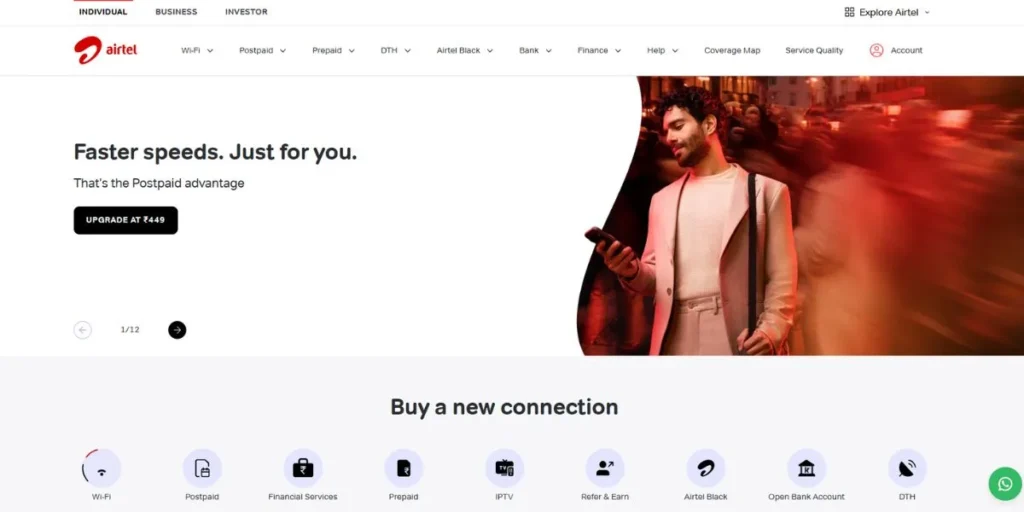
| Parameter | Details |
| Ownership | Private |
| Network | 4G & 5G Non-Standalone (NSA) |
| Approx. Market Share | 37.96% |
| Starting Prepaid Plan | ₹199 (28 Days, 2GB Data, Unlimited Calling) |
| Best For | Premium network stability, rural voice coverage, and high ARPU |
| Website | https://www.airtel.in/ |
Bharti Airtel has established itself as one of the most reliable sim card companies in India and is topping the charts in terms of Average Revenue Per User growth and postpaid subscriber additions. The foundation of its strength is a stable network, with the Xstream Fiber and 5G network being expanded throughout metros and smaller towns. Airtel’s strength lies in the robust size of its enterprise base, and premium service positioning which helps secure high value customers for the company. It’s a specialty here, namely reliable connectivity, both voice and data, and Airtel is the obvious choice for professionals, enterprise customers and anyone who considers network reliability rather than rock-bottom pricing to be more important.
3. Vodafone Idea (Vi)
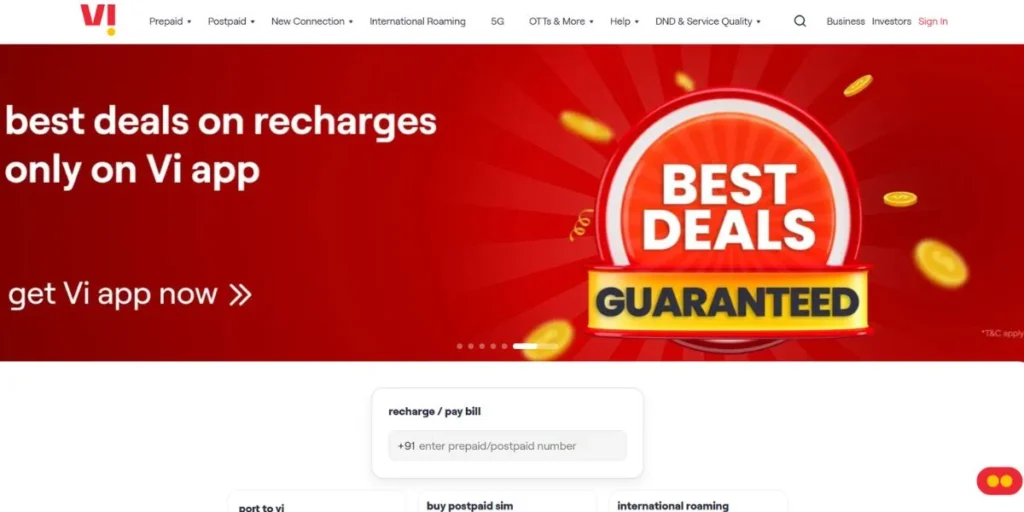
| Parameter | Details |
| Ownership | Private |
| Network | 4G & Expanding 5G |
| Approx. Market Share | 15.50% |
| Starting Prepaid Plan | ₹199 (28 Days, 1.5GB Data, Unlimited Calling) |
| Best For | Night-time data consumption and bundled entertainment packs |
| Website | https://www.myvi.in/ |
Vi, or Vodafone Idea is India’s third largest private mobile operator and remains among one of the more value-based telecom operators in the country. Following significant financial restructuring and government equity injection, Vi has increased its capital expenditure for infrastructure modernization and deployment of 5G in key cities. Its growth benefit is targeted consumer incentives—mainly the ability to add-on unlimited night-time data to streaming plans, which are attractive for heavy streamers and remote workers. Vi’s niche is customizable pricing and entertainment packages, making it a great secondary choice or affordable alternative to those seeking data value at an expensive price.
4. BSNL (Bharat Sanchar Nigam Limited)
| Parameter | Details |
| Ownership | PSU (Public Sector Undertaking) |
| Network | 2G, 3G, 4G & Indigenous 5G Testing |
| Approx. Market Share | 7.25% |
| Starting Prepaid Plan | ₹107 (35 Days, 3GB Total Data, 200 Mins Calls) |
| Best For | Low-cost secondary SIM and remote rural reach |
| Website | https://bsnl.co.in/ |
BSNL is the state-run option of all the sim card companies in India for being affordable and accessible to rural areas. It has already had more than 98,000 indigenous 4G sites deployed with the government’s financial backing and is steadily progressing to an indigenous 5G rollout, making it an attractive option for budget-conscious customers and remote areas. BSNL has been known for its long validity and affordable recharge rates, which is why it is particularly popular among those who wish to use a secondary SIM for extended durations without spending too much money.
5. MTNL (Mahanagar Telephone Nigam Limited)
| Parameter | Details |
| Ownership | PSU (Public Sector Undertaking) |
| Network | 2G & 3G (Phasing Out) |
| Approx. Market Share | 0.01% |
| Starting Prepaid Plan | ₹90 approx. |
| Best For | Legacy landline services in Delhi and Mumbai metros |
| Website | https://www.mtnl.net.in/ |
MTNL is limited to operating in Delhi and Mumbai, and its mobile service has been heavily contracted in recent years and is now largely being run as an integrated entity with BSNL with a view to rationalising the state telecom assets. It’s still good for legacy landline infrastructure, corporate leases and urban real estate – not for mobile subscriber activity. Today MTNL is a niche legacy option with its specialty in the basics of government communications and traditional voice networks in its own twin metros, not a competitive retail SIM player.
6. Tata Communications Ltd. (Formerly VSNL)
| Parameter | Details |
| Ownership | Private (Tata Group) |
| Network | Global Enterprise & Submarine Cable Infrastructure |
| Approx. Market Share | Dominant in international corporate wholesale data |
| Starting Plan | Custom Corporate Tariffs Only |
| Best For | Global cloud routing, Tier-1 carrier data, and IoT |
| Website | https://www.tatacommunications.com/ |
Tata Communications is not a typical retail telecom operator, but rather a provider of enterprise-grade digital infrastructure. It has a large network of fiber-optic cables under the sea which carry a substantial portion of global internet traffic, which gives it a unique role in data routing around the world. It is correlated with the increasing uptake of cloud and enterprise-scale digital transformation, across industries. Its niche expertise is in managed network security, transnational data routing, and scalable IoT frameworks, making it an ideal partner for large corporations and tech companies, not the common citizen seeking a personal SIM.
7. Tata Teleservices Maharashtra Ltd. (TTML)
| Parameter | Details |
| Ownership | Private (Tata Group) |
| Network | Wireline, Broadband, & Cloud Enterprise |
| Approx. Market Share | Focused B2B Market Segment |
| Starting Plan | B2B Plan Based on Lease Requirements |
| Best For | Smart enterprise connectivity solutions and cloud communication |
| Website | https://www.tatatelebusiness.com/ |
Unlike consumer mobile network providers, TTML has completely exited the retail mobile service business and is a business-to-business provider of connectivity. Its focus is on cloud communication, cyber security and high capacity leased data lines to corporate clients. The digital transformation occurring across Indian small and medium businesses is accelerating this growth. What makes TTML special is support for MPLS data networks, unified communication applications, and tailored enterprise internet service solutions—areas where it’s a backbone provider for businesses, not a brand that is commonly seen by individual sim card companies in India.
8. Indus Towers Ltd.
| Parameter | Details |
| Ownership | Private (Jointly backed by Bharti Airtel & partners) |
| Network | Shared Passive Telecom Tower Infrastructure |
| Approx. Market Share | National Passive Infrastructure Leader |
| Starting Plan | Provider-to-Provider Leases Only |
| Best For | Cellular tower tenancy and multi-operator network sharing |
| Website | https://www.industowers.com/ |
Indus Towers is the silent force that supports each and every call and data session across India’s networks. It does not compete with retail mobile operators, but is home to the physical towers and equipment of the big carriers across the country, with more than 238,000 tower structures. It is closely associated with the continued scale up of 5G microcells and macro towers nationwide. Indus Towers enables multiple operators to leverage the same physical infrastructure and its specialty is to build and maintain India’s wireless networks while keeping them continuously active and expanding, thus enabling carriers to save significant capital.
9. IBus Virtual Network Services
| Parameter | Details |
| Ownership | Private |
| Network | Neutral Host Virtual & In-Building Networks |
| Approx. Market Share | Micro-niche hospitality & commercial coverage |
| Starting Plan | Venue-Integrated Connectivity Models |
| Best For | High-density indoor cellular coverage and commercial spaces |
| Website | https://ibusglobal.com/ |
The key benefit that IBus brings is the capability to provide robust indoor reception which cannot be achieved by most national mobile networks alone. The company also provides indoor distribution antenna systems for airports, tech parks and multi-level office buildings, where signals can sometimes be lost. The need for 5G frequencies to operate effectively is increasing as they need to be more closely connected with indoor broadcasting points. Unlike any other major consumer network, IBus is ideal for call drop prevention and fast data speeds inside complex structures, complementing each of the major consumer networks and not competing with them, making it well-suited to building owners and commercial property managers.
10. Quadrant Televentures Ltd. (Connect Broadband)
| Parameter | Details |
| Ownership | Private |
| Network | Fixed Voice & Fiber Broadband |
| Approx. Market Share | Regional focus (primarily Punjab circle) |
| Starting Plan | ₹400 approx. (Monthly Fixed Broadband) |
| Best For | Regional broadband lines and fixed corporate wirelines |
| Website | https://www.connectbroadband.in/ |
Quadrant Televentures, which operated under the Connect Broadband brand, had already diversified from mobile SIM operations to focus on the fixed-line broadband business in the Punjab telecom circle. This qualifies it as a regional player instead of one of the national telecom companies bidding for mobile customers. Its growth benefit because it provides competitive high speed fiber connections specifically for local households and businesses. Its focus is on providing tailor-made packages for home internet, leased lines in the region and dedicated wireline solutions for businesses in its home state, with a smaller but more loyal customer base.
Quick Comparison Table: SIM Card Companies in India
| Company | Ownership | Network | Market Share | Starting Prepaid Plan | Best For |
| Reliance Jio | Private | 4G & 5G SA | 39.27% | ₹189 | High-speed 5G data & digital ecosystem |
| Bharti Airtel | Private | 4G & 5G NSA | 37.96% | ₹199 | Network stability & premium service |
| Vodafone Idea (Vi) | Private | 4G & Expanding 5G | 15.50% | ₹199 | Night data & entertainment bundles |
| BSNL | PSU | 2G/3G/4G, 5G Testing | 7.25% | ₹107 | Budget SIMs & rural reach |
| MTNL | PSU | 2G & 3G | 0.01% | ₹90 approx. | Legacy landline in Delhi & Mumbai |
| Tata Communications | Private | Enterprise & Submarine Cable | Enterprise wholesale leader | Custom corporate tariffs | Global cloud routing & IoT |
| TTML | Private | Wireline, Broadband & Cloud | B2B focused segment | Custom B2B plans | Enterprise cloud communication |
| Indus Towers | Private | Shared Tower Infrastructure | National infra leader | Provider-to-provider leases | Tower tenancy & network sharing |
| IBus Network Services | Private | Neutral Host Indoor Networks | Micro-niche indoor coverage | Venue-integrated plans | High-density indoor coverage |
| Quadrant Televentures | Private | Fixed Voice & Fiber Broadband | Regional (Punjab circle) | ₹400 approx. | Regional broadband & wirelines |
Telecom Market Share in India (2026 Data)
The Telecom Regulatory Authority of India data indicates that state-owned operators occupy a smaller niche, accounting for less than 92 percent of the market, while private operators have the lion’s share of the market. Together, Jio and Airtel account for more than 77 percent of the wireless user base in India, making them the biggest contributors to the rollout of 5G and digital services across the country.
BSNL is steadily expanding its 4G base with local technology, and Vi occupies a significant third place. This concentration makes it so that most of the sim card companies in India that target the common man have practically four feasible options to choose from when buying a sim.
How to Choose the Right SIM Card Company
For Residents: Speed, Coverage & Monthly Cost
- Before changing, see 5G and 4G coverage maps for your city or neighborhood.
- Make sure to check both up-front and ongoing costs, as well as daily data limits.
- Think about packages such as OTT subscriptions, cloud storage, or families.
- Take into account the level of customer service and proximity to retail outlets for additional support.
- For those who are traveling between cities frequently, make sure that the operator’s network is consistent across the country.
- If you have a rural or remote address, check the actual signal strength instead of the advertised coverage.
For Travelers: eSIM vs. Physical SIM, KYC Requirements
| Factor | eSIM | Physical SIM |
| Activation | Instant, digital QR scan | Requires physical store visit |
| Device Compatibility | Needs eSIM-supported phone | Works with any unlocked phone |
| KYC Process | Can often be done online | Usually in-person with documents |
| Availability | Limited to select operators | Offered by all major mobile network providers |
| Best For | Tech-savvy travelers with newer phones | Travelers needing broad device compatibility |
SIM Card Registration & e-KYC Rules in India (2026)
- For New Connection, a valid Government issued Photo ID (Aadhaar / Passport) is required.
- Generally, foreign visitors will require their passport and visa information for verification.
- Near instant e-KYC activation at authorized retail stores, with the help of biometric or Aadhaar IDs.
- Self-KYC via operator Apps is growing for eSIM and digital-first activations.
- The ID proof will always be accompanied by a passport photo, which is usually a passport size photo.
- The re-verification process may be required on a regular basis when there are changes to the regulations.
- For corporate/bulk connections, other sim card companies in India authorizing documents are required.
Jio vs Airtel vs Vi vs BSNL: Which Should You Choose?
| Priority | Recommended Operator | Why |
| Fastest 5G data | Reliance Jio | Largest Standalone 5G footprint |
| Network reliability | Bharti Airtel | Strong ARPU and premium stability |
| Budget flexibility | Vodafone Idea (Vi) | Competitive night-data pricing |
| Lowest-cost secondary SIM | BSNL | Long validity at low price points |
| Enterprise connectivity | Bharti Airtel or Tata Group entities | Strong B2B infrastructure |
eSIM vs Physical SIM in India: Key Differences
| Feature | eSIM | Physical SIM |
| Setup Time | Minutes, via QR code | Requires store visit and card insertion |
| Portability | Cannot be physically moved between phones | Can be swapped across devices |
| Loss Risk | Cannot be lost or physically damaged | Can be misplaced or damaged |
| Multiple Profiles | Supports multiple numbers on one device | Requires dual-SIM slot for multiple numbers |
| Adoption | Growing steadily among newer smartphones | Universally supported across all phones |
Conclusion
Whether you are a data hungry person who wants to make the most of the 5G technology or a budget-conscious individual or short-term traveler, India’s telecom landscape will have something for you in 2026. For speed and reliability, Jio and Airtel are the top two options; if you’re looking for a great value, Vi is the next best choice; and if you’re looking for a low-cost long validity SIM card, BSNL is the one to choose. While there are retail players, there are also infrastructure companies that silently support the ecosystem such as Indus Towers and Tata Communications.
If you compare sim card companies in India, consider the region you are traveling to, your data usage, and your budget first, and then match those requirements to the operator that can provide them.
Also Read:
FAQs
Which is the best SIM card company in India in 2026?
Reliance Jio is at the forefront of the 5G speed race and market share whereas Bharti Airtel has got the edge when it comes to network stability, and it is a matter of choice.
How many sim card companies in India are there?
Apart from the five major retail operators namely Jio, Airtel, Vi, BSNL and MTNL, there are some telecom companies that are focused on the enterprise as well as infrastructure segment.
Which are the documents required to purchase a Sim card in India?
Aadhaar / Passport along with a passport size photograph is required for KYC verification.
Is it possible to purchase a SIM card in India?
Yes, visitors are able to buy a SIM with their passport and visa information, and a number of operators have eSIM capabilities for compatible devices.
What is the difference between prepaid and post-paid SIM cards in India?
Prepaid is paying for use before it is used for a predetermined period of time and data limit, whereas postpaid is paid for per use, and may come with premium benefits.
Is eSIM available in India?
There are a few big players that now allow for eSIM activation, which means that users can now set up an eSIM for an eSIM-compatible smartphone and avoid physical cards entirely.